
A considerable proportion of Serbian females who look for companions on-line suffer ‘undesirable’ experiences offline, from harassment to despise speech, tracking to sexual assault. And very couple of really feel able to look for aid.
She met him on Badoo, a prominent dating application. Yet as opposed to a boyfriend, she obtained a stalker – virtually a month of continuous calls, texts, and physical harassment.
‘He waited on me in the hallway of the building where I live,’ the female wrote in answer to a BIRN questionnaire on the experiences of females with on-line dating. ‘He claimed he loved me after four days; grabbed me by my neck when I stated I didn’t desire anything with him.’
The woman’s account is just one of greater than 100 sent by females in Serbia as part of a BIRN examination right into the dark side of on the internet dating. And her tale is much from uncommon.
A quarter of participants reported stalking, harassing or sexual harassment; two-thirds reported some kind of unpleasant experience; and the large bulk were reluctant to share what took place to them with anybody else, let alone record the cases to the cops. Almost half stated they really felt insufficiently protected when using dating apps.
Serbia is no exemption: ladies as a whole are virtually twice as likely as guys to have a negative experience on dating sites and applications.
In the USA, three out of five women will certainly have some sort of unpleasant experience when online dating.
Regardless of such numbers, the similarity Tinder and Badoo are under no responsibility to reveal information on the rate of complaints or what action they have taken in such situations; females proclaim to have little or no count on those responsible charged with helping them.
The primary findings of BIRN’s examination are:
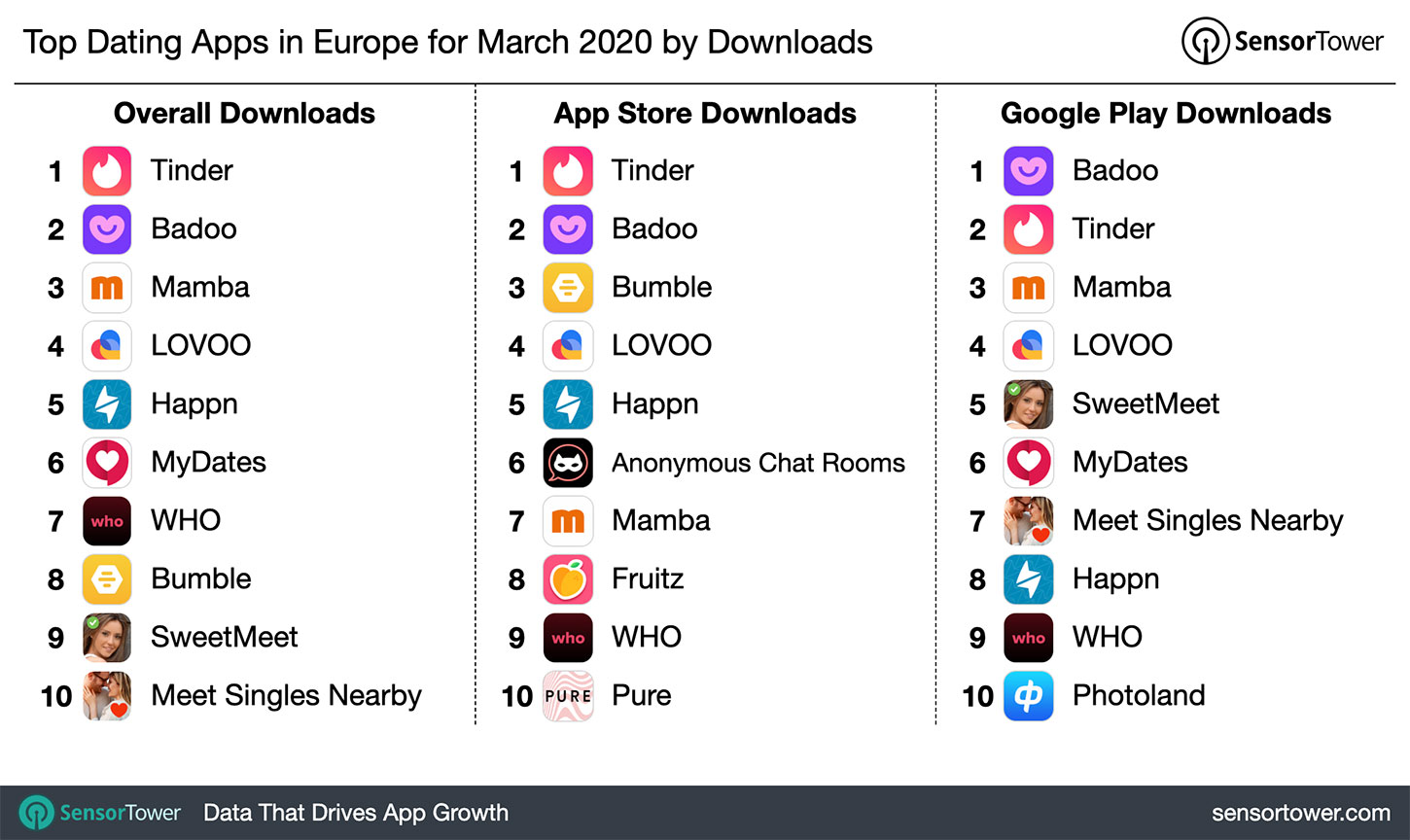
- Tinder and Badoo are one of the most popular dating platforms among those that responded to the questionnaire, as well as social networks Instagram, Twitter and facebook
- Two in 3 females reported some sort of unpleasant experience
- Two in 5 females experienced acting – i.e. that the other individual pretended to be another person – and one in 4 claimed they had been the target of hate speech
- One in four ladies that took place to meet their online dates offline experienced stalking, bullying or unwanted sexual advances, ranging from forced kissing to forced intercourse
- Nine in ten ladies stated they would not tell any person what occurred to them
- Virtually fifty percent of women [44 per cent] do not feel adequately shielded and secure while dating online
- Social dating systems are under no commitment to show the general public the amount of individuals reported security violations or misuse, nor what action the business took.
Asked why they had actually not reported such events, one lady replied: ‘Pity’.Read here www.pplaymusic.us/ At our site An additional responded, ‘I was humiliated. I still am.’ A 3rd claimed, ‘I thought I ‘d be mocked or misinterpreted.’
A short-cut to like?
The concept that an algorithm may help discover the best partner is not a post-Y2K phenomenon.
The first contemporary dating website, Kiss.com, went online in 1994, the year the Web was born. Today, around the world, the most prominent online dating tool is Tinder, which by February in 2015 had actually hit 500 million cumulative downloads.
Over the past four years, the appeal of this type of dating has doubled globally; we invest an increasing number of time online, working, socializing, shopping, and the COVID-19 pandemic only increased this change. In 2020, the year the pandemic started, Tinder signed up a record 3 billion swipes in a single day.
‘Online dating allows you to somehow shorten the path in the entire process of dating, so you can see what occurs there and whether it is worth alloting even more time to a certain person or otherwise,’ said Selena Spica, a research study assistant at the Institute for Sociological Research Study of the University of Belgrade and PhD candidate at the Laboratoire d’Etudes de Category et de Sexualitd in Paris.
One 32-year-old respondent from a rural area of Serbia said on-line dating was the only method she reached satisfy new people. For some millennials, birthed between 1981 and 1996, online dating is the brand-new norm. ‘Whatever we do, we do on-line,’ said one. ‘So why not day online.’
‘It’s a good way to be familiar with a person prior to you see each other in person,’ said a 22-year-old participant. However does such ‘filtering’ constantly function?
Victim criticizing
‘Trial and error,’ is just how one woman explained on the internet dating in the BIRN survey. Without a doubt, some satisfied their current companions on dating apps. For others, it’s a real ‘miss out on.’
‘Not wonderful, not awful. No, scrape that. Dreadful,’ stated one 37-year-old female.
An additional, 23 years old, satisfied a male over Instagram. From their online conversation he appeared ‘really nice,’ she claimed, so she accepted fulfill him personally.
They fulfilled in a public area, however that did not quit him from attempting to kiss her and force himself on her. The female said she tried to walk away yet he followed her to her car. She got behind the wheel and secured the door, but the man began banging on the window and trying to break in.
Two-thirds of participants reported some type of ‘unpleasant experience’. These variety from obtaining unwanted specific photos and videos or unwanted specific summaries of sex-related fantasies, to blackmail, name-calling or hazards. Offline experiences can lead to stalking, sexual assault and physical violence.
Two in 5 participants experienced acting, when the other person utilizes someone else’s name and/or photo and individual information; one in 4 endured hate speech; one in 5 was endangered and/or blackmailed; 15 percent were sexually bugged online and when online dating went offline one in four women was harassed, stalked or sexually harassed, with sexual harassment ranging from forced kisses to forced sexual relations.
Spica said that events of physical violence were representative of ‘the Serbian truth’, one formed by a macho in which males are regarded as beings of uncontrolled libido and ladies as items at their disposal.
‘Relying on the toughness of the representation of macho, we will have different cases – a forced kiss, unrequested photos and video clips, tried rape or some type of troubling comment,’ she informed BIRN. ‘It depends upon just how deep the manly principle is rooted in the perception of a particular guy.’
On-line dating, Spica said, is viewed as ‘a man’s round, since males are the ones who have naturally unrestrained libido.’
So when a female experiences some sort of fierce practices, society asks, ‘what were you doing on that application? This isn’t your area; what did you expect? It’s except ladies, it’s not natural.’
Andrijana Radoicic Nedeljkovic, a programme coordinator at the NGO Atina, which collaborates with victims of human trafficking and gender-based physical violence, claimed that females who take part in on-line dating are seen by some in society as asking for trouble.
‘It’s since she really did not take sufficient treatment, she didn’t meet her partner in a standard method, she wasn’t smart sufficient, with the idea that this would certainly somehow avoid violence, which obviously is not real; responsibility for the physical violence lies only with the perpetrator,’ claimed Radoicic Nedeljkovic.
Tinder: information unavailable
Greater than a third of women who participated in the BIRN study claimed they make use of Tinder. Tinder, however, told BIRN it does not ‘have access’ to data on the amount of women in Serbia utilize the app. It gave the very same solution when inquired about international data.
BIRN likewise asked Tinder how many complaints it had actually gotten from women users and the amount of ask for details from public establishments. ‘Regrettably, we do not have any type of further information readily available,’ Tinder responded.
Filip Milosevic, manufacturer at SHARE Structure, which checks the electronic community in Serbia, was skeptical. ‘Tinder probably has this data, yet is under no obligation to release it,’ he stated.
Besides Tinder, Meta’s social media networks Facebook and Instagram are most prominent when it comes to online dating. Though not mostly dating applications, 43 per cent of respondents stated they utilize Facebook and Instagram to find dates.
Both Tinder and Meta use some safety tools and features in cases of on the internet dating violence or scams.
Meta likewise has an International Lady’s Safety Hub comprising ’12 nonprofit leaders, activists and academic specialists who have been spoken with when developing brand-new plans, products and programs’ to maintain female customers safe, the firm informed BIRN.
Tinder, meanwhile, has its own dating security guidelines and partnered with Garbo, a ‘female-founded, charitable background check platform,’ to supply every Tinder participant using two cost-free background checks, but only in the United States.
‘Tinder is definitely mindful that acting is a big trouble, which is why it introduces confirmation mechanisms,’ said SHARE’s Milosevic. ‘The lack of openness worrying the mentioned data possibly demonstrates how large the issue actually is.’
‘Report? To whom?’
Despite the prevalence of abuse, nine out of 10 women with such experiences stated they had actually ruled out informing anybody. Sixty-five percent of those that do choose to talk confide just in their pals.
‘Every person primarily thinks on the internet dating applications are utilized just for sex and with you stating ‘Yes’ to a date, the man thinks you stated ‘Yes’ to sex,’ claimed a 40-year-old lady.
Information from BIRN’s study sustains this: over 40 per cent of participants reported experiencing some sort of harassing behaviour with sex-related connotations, either online or during offline encounters.
‘If you are a lady on such a system, it implies that you came for that [rape and sexual violence], and even if you consent to go out with them, you’re a whore 100 per cent,’ claimed a 21-year-old, describing the type of bias surrounding on the internet dating.
‘As soon as you browse the web, they look at you as an asset. Still, if they met ‘the exact same you’ at a good friend’s college graduation party, they might fall in love permanently.’
Such prejudices dissuade women from reporting abuse, stated Spica.
‘It shapes a circumstance in which the sufferer can not talk about it if she wishes to and when she wants to, and without stricture from society, because the system of securing victims from violence merely does not operate in our nation.’
On paper, Serbia has a lawful framework in position to manage such abuse, even without recognising on the internet dating as an unique classification. However actually, couple of wrongdoers are ever penalized.
The context in which call was made, in this situation, using an on the internet dating application, can not be a justification for ‘not starting treatments for criminal acts of Fraudulence, Domestic Physical Violence, Unwanted Sexual Advances, Stalking or any other act that occurred by doing this,’ the Autonomous Women’s Centre informed BIRN.
However victims are not going to the cops.
‘In truth, if a female goes to the authorities and states that she was deceived or that she was misinformed or that she experienced some form of violence that falls under some offense, or that her information was dealt with without her authorization, the probability that she will actually obtain sufficient assistance and that the wrongdoer will really be prosecuted is very little,’ stated Radoicic Nedeljkovic.
The Serbian indoor ministry told BIRN that, in between 2017 and 2021, it had not requested any type of information worrying gender-based violence grievances to any specialized internet sites or on-line dating applications.
The ministry did not comment on the objection levelled by BIRN’s respondents worrying the lack of institutional support for sufferers of abuse.
